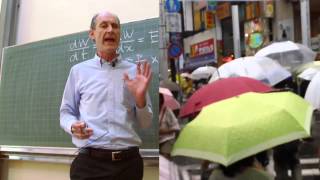
Dr. Katie Bouman, who starts as assistant professor of computing and mathematical sciences at Caltech in June 2019, describes how the Event Horizon Telescope team captured the first-ever image of a black hole.
Have you ever flown in an airplane and are you curious about how flying works? Are you interested in the fundamental concepts behind flying? How does a wing generate lift? And how can we fly as optimally as possible?
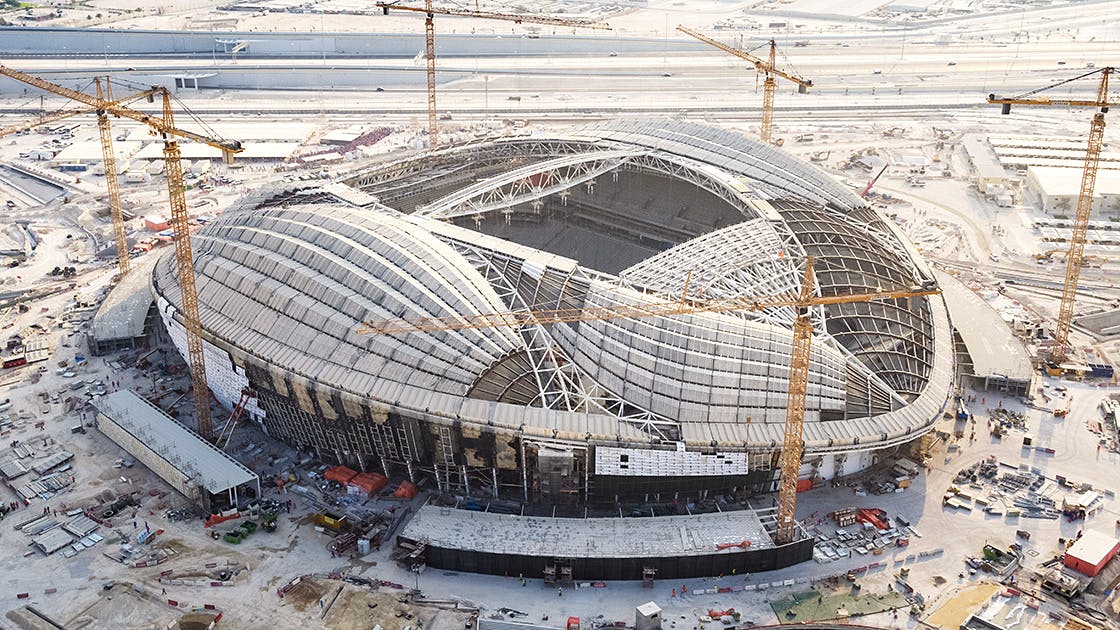
The Qatar World Cup 2022 will give Qatar and the Middle East a set of world-class stadiums which will become magnets for future events of every kind.
Most of the venues will feature modular designs to allow excess seating to be removed post-2022. These seats will be donated to football projects around the globe, helping to spread the love of the game and spurring its worldwide development. The stadiums' reduced capacities will create arenas suitable for local football and other events, guaranteeing a vibrant atmosphere.
The areas surrounding the stadiums will become focal points for their communities. They will include high-quality sporting facilities, parks, schools, transport links, shopping centres and places of worship. These amenities will help the country to achieve the development goals set out in the Qatar National Vision 2030.
The Dam Design Book explains in detail the types of dams and their specifications, such as concrete dams with real images, common design errors and how to choose the type of dam. You can download the book in pdf format below :
Design of shoreline protection along rivers, canals and the sea; load on bed and shoreline by currents, wind waves and ship motion; stability of elements under current and wave conditions; stability of shore protection elements; design methods, construction methods.
Flow: recapitulation of basics from fluid mechanics (flow, turbulence), stability of individual grains (sand, but also rock) in different type of flow conditions (weirs, jets), scour and erosion. Porous Media: basic equation, pressures and velocities on the stability on the boundary layer; groundwater flow with impermeable and semi-impermeable structures; granular filters and geotextiles. Waves: recapitulation of the basics of waves, focus on wave forces on the land-water boundary, specific aspects of ship induced waves, stability of elements under wave action (loose rock, placed blocks, impermeable layers) Design: overview of the various types of protections, construction and maintenance; design requirements, deterministic and probabilistic design; case studies, examples Materials and environment: overview of materials to be used, teraction with the aquatic environment, role of the land-water boundary as part of the ecosystem; environmentally sound shoreline design.
Have you ever wondered what it takes to get your train on the right platform at the scheduled time every day?
Journey with us into the world of rail - a complex system that connects people, cities and countries.
Railway systems entail much more than a train and a track. They are based on advanced technical and operational solutions, dealing with continuously changing demands for more efficient transport for both passengers and freight every day. Each system consists of many components that must be properly integrated: from trains, tracks, stations, signaling and control systems, through monitoring, maintenance and the impact on cities, landscape and people. This integration is the big challenge and the source of many train delays, inconvenient connections and other issues that impact our society.
This engineering course attempts to tackle those issues by introducing you to a holistic approach to railway systems engineering. You will learn how the system components depend on each other to create a reliable, efficient and state-of-the-art network.
We will address questions such as:
How do railways work and how did they evolve over time?
How do different components of the railway system interact?
What is the effect of railways from an urban, social and economic point of view?
What can be done to improve the monitoring and maintenance of tracks?
How are timetables designed in a way that balances passenger demand with the capacity of the railway and is adaptable to handle unexpected disturbances?
How to prevent and deal with disturbances caused by external factors?
How does the design of railways influence their performance over time?
A new serious game has been designed for this course to guide you through the process of decision making while building a rail network and maintaining it. Cities have to be connected in an ever-changing setting, dealing with wear, capacity, developments and disturbances. How will your choices affect the performance of the system?
What you'll learn
Identify the name and function of the main railway network components
Evaluate the influence that railways exert on their environment and vice versa
Explain the different methods of train control and their effect on timetabling and safety
Understand the effects and the internal and external factors of disturbances on railway operations
Identify the different methods of dealing with system degradation and the effects of interaction between the components
Explore the state-of-the-art and future developments of railway systems
Are you an expert in the field?While this MOOC introduces different aspects of the railway network, if you want to go into more detail, gain advanced knowledge and expertise for your daily work, you can enroll in our follow-up online professional education courses.
If you're interested in the concept of building with nature, then this is the engineering course for you. This course explores the use of natural materials and ecological processes in achieving effective and sustainable hydraulic infrastructural designs. You will learn the Building with Nature ecosystem-based design concept and its applications in water and coastal systems. During the course, you will be presented with a range of case studies to deepen your knowledge of ecological and engineering principles.
You'll learn from leading Dutch engineers and environmental scientists who see the Building with Nature integrated design approach as fundamental to a new generation of engineers and ecologists.
Join us in exploring the interface between hydraulic engineering, nature and society.
What you'll learn:
Basic engineering design principles, and basic ecological principles, relevant to the Building with Nature approach
How to assess which principles are applied in several case studies and so form your own opinion on whether the hydraulic infrastructure is meeting engineering, ecosystem and societal goals
How to apply your new knowledge in assessing the potential for Building with Nature solutions where you live
Program
1: Introduction to Building with Nature Introduction to the Building with Nature concept and its importance through a number of dramatic examples. Identifying hydraulic engineering infrastructures, and exploring the diversity of standpoints on their ecological effects.
2: Engineering design principles The engineering design process is explained and the underlying principles are distilled. Students familiarize themselves with the material through classification exercises.
3: Ecological design principles The concept of designing in accordance with ecological principles is explained. Students identify different types of aquatic ecosystems and distill principles on the basis of ecosystem character and functioning.
4: Integrated design Students apply their new knowledge in assessing the potential for Building with Nature solutions in case studies, or in their locality. Trade-offs in applying engineering and ecological principles are explicated, and the opportunities for nature are clarified.
5: Integrated design review Critical evaluation of whether hydraulic infrastructure is fit for purpose in meeting engineering, ecological and societal goals by peer reviewing case studies from week 4. In particular, students assess the coherence between the infrastructure design and the ecosystem character and function.
This course will focus on basic technologies for the treatment of urban sewage. Unit processes involved in the treatment chain will be described as well as the physical, chemical and biological processes involved. There will be an emphasis on water quality and the functionality of each unit process within the treatment chain. After the course one should be able to recognize the process units, describe their function and make simple design calculations on urban sewage treatment plants.
The course consists of 6 modules:
Sewage treatment plant overview. In this module you will learn what major pollutants are present in the sewage and why we need to treat sewage prior to discharge to surface waters. The functional units will be briefly discussed
Primary treatment. In this module you learn how coarse material, sand & grit are removed from the sewage and how to design primary clarification tanks
Biological treatment. In this module you learn the basics of the carbon, nitrogen and phosphorous cycle and how biological processes are used to treat the main pollutants of concern.
Activated sludge process. In this module you learn the design principles of conventional activated sludge processes including the secondary clarifiers and aeration demand of aeration tanks.
Nitrogen and phosphorus removal. In this module you learn the principles of biological nitrogen removal as well as phosphorus removal by biological and/or chemical means.
Sludge treatment. In this module you will the design principles of sludge thickeners, digesters and dewatering facilities for the concentration and stabilization of excess sewage sludge. Potentials for energy recovery via the produced biogas will be discussed as well as the direct anaerobic treatment of urban sewage in UASB reactors when climate conditions allow.
Water is essential for life on Earth and of crucial importance for society. Water also plays a major role in affecting climate. Its natural cycle, from ocean to atmosphere by evaporation, then by precipitation back to land returning via rivers and aquifers to the oceans, has a decisive impact on regional and global climate patterns.
For students of engineering, climate science and environmental studies, this course offers a first introduction to the physics of water systems and their role in climate. In addition, we show you the state-of-the-art engineering interventions that can be applied to water systems. These can improve coastal safety and increase the availability of water supplies worldwide.
The course welcomes students from all over the globe, so we actively encourage discussion of water and climate issues you may experience in your location, now and in the coming decades.
After taking this course, you will be able to:
Understand the different processes at play in the global water cycle.
Identify and describe the flows of water and sand in different riverine, coastal and ocean systems.
Identify mechanisms of climate change and explain the interplay between climate change, sea level, clouds, rainfall and future weather.
Explain why, when and which engineering interventions are needed in rivers, coastal and urban environments.
Explain why water for food and water for cities are the main challenges in water management and propose solutions.
Explain and confront the challenges in better understanding and adapting to the impact of climate change on water over the coming 50 years.
The course consists of knowledge clips, movies, exercises, and exam assignments. There are opportunities to discuss course materials with your fellow students and the Course Team through our online forum. We also provide interactive feedback video sessions in which the lecturers discuss issues raised by students.
Delft University of Technology (TU Delft) has a unique reputation when it comes to water and climate, with faculty experts in the fields of climate research, water management and hydraulic engineering. The course introduces you to many aspects of water and climate: from the micro scale of raindrops to the macro scale of oceans, and from understanding the physics of the different water systems to practical engineering solutions that may help societies adapt to the present and future impacts of climate change on water.