Dr. Katie Bouman, who starts as assistant professor of computing and mathematical sciences at Caltech in June 2019, describes how the Event Horizon Telescope team captured the first-ever image of a black hole.
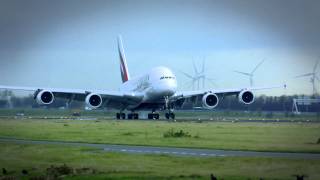
Have you ever flown in an airplane and are you curious about how flying works? Are you interested in the fundamental concepts behind flying? How does a wing generate lift? And how can we fly as optimally as possible?
This course introduces the basic components of an airframe structure and discusses their use and limitations. The realities of composite design such as the effect of material scatter, environmental knockdowns, and damage knockdowns are discussed and guidelines accounting for these effects and leading to robust designs are presented.
The resulting design constraints and predictive tools are applied to real-life design problems in composite structures. A brief revision of lamination theory and failure criteria leads into the development of analytical solutions for typical failure modes for monolithic skins (layup strength, buckling under combined loads and for a variety of boundary conditions) and stiffeners (strength, column buckling under a variety of loads and boundary conditions, local buckling or crippling for one-edge and no-edge-free conditions). These are then combined into stiffened composite structures where additional failure modes such as skin-stiffener separation are considered. Analogous treatment of sandwich skins examines buckling, wrinkling, crimping, intra-cellular buckling failure modes. Once the basic analysis and design techniques have been presented, typical designs (e.g. flange layup, stiffness, taper requirements) are presented and a series of design guidelines (stiffness mismatch minimization, symmetric and balanced layups, 10% rule, etc.) addressing layup and geometry are discussed. On the metal side, the corresponding design practices and analysis methods are presented for the more important failure modes (buckling, crippling) and comparisons to composite designs are made. A design problem is given in the end as an application of the material in this Part of the course.
What you will learn
Provide a link between standard introductory courses in metals and composites and actual applications with focus on composite structures. It is a summary of the main methods used to design and analyze composite and metal structures in practice. Show how some of the approximate methods used in design can be derived and what the limitations of such methods are.
Have you ever flown in an airplane and are you curious about how flying works? Are you interested in the fundamental concepts behind flying? How does a wing generate lift? And how can we fly as optimally as possible?
This course provides an introduction to the fundamentals of aeronautics, using a tour through the history of flight, starting with ballooning and continuing on to airplanes and helicopters.
Experts from the Faculty of Aerospace Engineering of Delft University of Technology will help you explore and discover the fundamentals of flight, in three blocks. First, you will explore the history of flight including ballooning and obtain a basic understanding of aircraft and the earth's atmosphere. Topics include stability, navigation, propulsion and the structure of aircraft. Block two examines the principles of aerodynamics. You will learn for instance how the shape of an airfoil or wing impacts the amount of lift generated. Block three covers flight mechanics, including various flight phases, such as descending, climbing or cruise, and the most optimal flying conditions for each phase.
What you'll learn
The impact of the history of flight on aircraft today.
How the earth's atmosphere can be modelled and how we can use this for aircraft design.
Stability, structures, navigation and propulsion of aircraft.
The fundamental aerodynamic concepts for flying an aircraft.
How airfoils and wings generate lift.
Flight mechanics of aircraft.
How aircraft can optimally climb, descend and cruise.