Dr. Katie Bouman, who starts as assistant professor of computing and mathematical sciences at Caltech in June 2019, describes how the Event Horizon Telescope team captured the first-ever image of a black hole.
Have you ever flown in an airplane and are you curious about how flying works? Are you interested in the fundamental concepts behind flying? How does a wing generate lift? And how can we fly as optimally as possible?
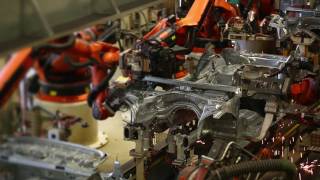
Sous le pilotage du Ministère de l’Industrie, du Commerce, de l’Economie Verte et Numérique, une équipe d’industriels et d’ingénieurs a conçu et fabriqué une machine de production des masques de protection à double lanière auriculaire 100% marocaine. L’appareil se compose d’une machine de fabrication de carrés de masques et d’une autre « Ear-loop » qui sert à souder les lanières.
Ce projet, le premier du genre, permet à l’industrie marocaine des masques de se doter d’une machine-outil sécurisant durablement sa production nationale et ses exportations et répondant à la fois au besoin national et à la forte demande internationale.
La machine « Ear loop » répond également à la demande des industriels de fabrication des masques pour améliorer la qualité de leur produit et le confort d’utilisation.
Si l’industrie marocaine est capable de fabriquer la matière première des masques de protection en tissus non tissés en quantité importante, les machines de fabrication des masques sont totalement importées. Ainsi, en développant sa propre ligne de production, l’industrie nationale réalise un saut technologique important. L’intégralité des pièces, soit plus de 400 composants mécaniques, électroniques et pneumatiques, a été intégralement usinée et fabriquée au Maroc par des équipes marocaines.
Ce projet a été réalisé par une équipe constituée d’entreprises industrielles et de sociétés d’engineering nationales : SOMACA, SERMP, AVIARAIL, ONYX pour le Développement de l’Industrie et du Commerce et l’Association Marocaine des Fabricants du Tissu non Tissé (AMFTNT).
Les plans de la machine sont la propriété du Ministère de l’Industrie, du Commerce, de l’Economie Verte et Numérique, ils seront mis à la disposition des entreprises qui souhaitent fabriquer la machine.
In this video we are going to see why lithium-ion batteries will continue their domination and in the future may even overshadow gasoline powered technologies, by understanding the technological enhancements happening in this area.
Electric vehicles are the future of transportation. Electric mobility has become an essential part of the energy transition, and will imply significant changes for vehicle manufacturers, governments, companies and individuals.
If you are interested in learning about the electric vehicle technology and how it can work for your business or create societal impact, then this is the course for you.
The experts of TU Delft, together with other knowledge institutes and companies in the Netherlands, will prepare you for upcoming developments amid the transition to electric vehicles.
You’ll explore the most important aspects of this new market, including state-of-the-art technology of electric vehicles and charging infrastructure; profitable business models for electric mobility; and effective policies for governmental bodies, which will accelerate the uptake of electric mobility.
The course includes video lectures, presentations and exercises, which are all reinforced with real-world case studies from projects that were implemented in the Netherlands.
The production of this course would not have been possible without the contributions of the Dutch Innovation Centre for Electric Road Transport (D-INCERT) and is taught by experts from both industry and academia, who share their knowledge and insights.
What you will learn
Role of electric vehicles in the energy transition
Basics of electric car and charging technology
Types of electric cars and how do they work
Introduction to the business of electric vehicles and its future potential
Policy ambitions and policy instruments for electric mobility