Saturday, 20 April 2019

Engineering: Building with Nature

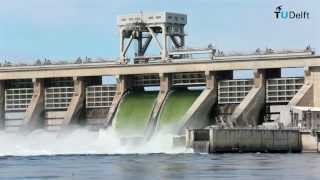
If you're interested in the concept of building with nature, then this is the engineering course for you. This course explores the use of natural materials and ecological processes in achieving effective and sustainable hydraulic infrastructural designs. You will learn the Building with Nature ecosystem-based design concept and its applications in water and coastal systems. During the course, you will be presented with a range of case studies to deepen your knowledge of ecological and engineering principles.
You'll learn from leading Dutch engineers and environmental scientists who see the Building with Nature integrated design approach as fundamental to a new generation of engineers and ecologists.
Join us in exploring the interface between hydraulic engineering, nature and society.
What you'll learn:
  • Basic engineering design principles, and basic ecological principles, relevant to the Building with Nature approach
  • How to assess which principles are applied in several case studies and so form your own opinion on whether the hydraulic infrastructure is meeting engineering, ecosystem and societal goals
  • How to apply your new knowledge in assessing the potential for Building with Nature solutions where you live

Program

1: Introduction to Building with Nature
Introduction to the Building with Nature concept and its importance through a number of dramatic examples. Identifying hydraulic engineering infrastructures, and exploring the diversity of standpoints on their ecological effects.

2: Engineering design principles
The engineering design process is explained and the underlying principles are distilled. Students familiarize themselves with the material through classification exercises.

3: Ecological design principles
The concept of designing in accordance with ecological principles is explained. Students identify different types of aquatic ecosystems and distill principles on the basis of ecosystem character and functioning.

4: Integrated design
Students apply their new knowledge in assessing the potential for Building with Nature solutions in case studies, or in their locality. Trade-offs in applying engineering and ecological principles are explicated, and the opportunities for nature are clarified.

5: Integrated design review
Critical evaluation of whether hydraulic infrastructure is fit for purpose in meeting engineering, ecological and societal goals by peer reviewing case studies from week 4. In particular, students assess the coherence between the infrastructure design and the ecosystem character and function.
Urban Sewage Treatment

This course will focus on basic technologies for the treatment of urban sewage. Unit processes involved in the treatment chain will be described as well as the physical, chemical and biological processes involved. There will be an emphasis on water quality and the functionality of each unit process within the treatment chain. After the course one should be able to recognize the process units, describe their function and make simple design calculations on urban sewage treatment plants.

The course consists of 6 modules:
  • Sewage treatment plant overview. In this module you will learn what major pollutants are present in the sewage and why we need to treat sewage prior to discharge to surface waters. The functional units will be briefly discussed
  • Primary treatment. In this module you learn how coarse material, sand & grit are removed from the sewage and how to design primary clarification tanks
  • Biological treatment. In this module you learn the basics of the carbon, nitrogen and phosphorous cycle and how biological processes are used to treat the main pollutants of concern.
  • Activated sludge process. In this module you learn the design principles of conventional activated sludge processes including the secondary clarifiers and aeration demand of aeration tanks.
  • Nitrogen and phosphorus removal. In this module you learn the principles of biological nitrogen removal as well as phosphorus removal by biological and/or chemical means.
  • Sludge treatment. In this module you will the design principles of sludge thickeners, digesters and dewatering facilities for the concentration and stabilization of excess sewage sludge. Potentials for energy recovery via the produced biogas will be discussed as well as the direct anaerobic treatment of urban sewage in UASB reactors when climate conditions allow.

Drinking Water Treatment

This course focuses on conventional technologies for drinking water treatment. Unit processes, involved in the treatment chain, are discussed as well as the physical, chemical and biological processes involved. The emphasis is on the effect of treatment on water quality and the dimensions of the unit processes in the treatment chain. After the course one should be able to recognize the process units, describe their function, and make basic calculations for a preliminary design of a drinking water treatment plant.
The course consists of 4 modules:
  • Introduction to drinking water treatment. In this module you learn to describe the important disciplines, schemes and evaluation criteria involved in the design phase.
  • Water quality. In this module you learn to identify the drinking water quality parameters to be improved and explain what treatment train or scheme is needed.
  • Groundwater treatment. In this module you learn to calculate the dimensions of the groundwater treatment processes and draw groundwater treatment schemes.
  • Surface water treatment. In this module you learn to calculate the dimensions of the surface water treatment processes and draw surface water treatment schemes.

Introduction to Water and Climate

Water is essential for life on Earth and of crucial importance for society. Water also plays a major role in affecting climate. Its natural cycle, from ocean to atmosphere by evaporation, then by precipitation back to land returning via rivers and aquifers to the oceans, has a decisive impact on regional and global climate patterns.
For students of engineering, climate science and environmental studies, this course offers a first introduction to the physics of water systems and their role in climate. In addition, we show you the state-of-the-art engineering interventions that can be applied to water systems. These can improve coastal safety and increase the availability of water supplies worldwide.
The course welcomes students from all over the globe, so we actively encourage discussion of water and climate issues you may experience in your location, now and in the coming decades.
After taking this course, you will be able to:
  • Understand the different processes at play in the global water cycle.
  • Identify and describe the flows of water and sand in different riverine, coastal and ocean systems.
  • Identify mechanisms of climate change and explain the interplay between climate change, sea level, clouds, rainfall and future weather.
  • Explain why, when and which engineering interventions are needed in rivers, coastal and urban environments.
  • Explain why water for food and water for cities are the main challenges in water management and propose solutions.
  • Explain and confront the challenges in better understanding and adapting to the impact of climate change on water over the coming 50 years.
The course consists of knowledge clips, movies, exercises, and exam assignments. There are opportunities to discuss course materials with your fellow students and the Course Team through our online forum. We also provide interactive feedback video sessions in which the lecturers discuss issues raised by students.
Delft University of Technology (TU Delft) has a unique reputation when it comes to water and climate, with faculty experts in the fields of climate research, water management and hydraulic engineering. The course introduces you to many aspects of water and climate: from the micro scale of raindrops to the macro scale of oceans, and from understanding the physics of the different water systems to practical engineering solutions that may help societies adapt to the present and future impacts of climate change on water.

Introduction to Aerospace Structures and Materials

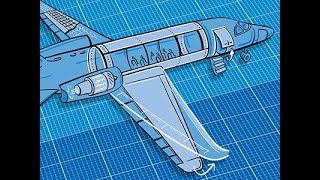
How do you design an aircraft or spacecraft? And in doing so, how do you keep the risk of failure minimal while bearing in mind that they will eventually fail?
In this course you will be taken on a journey through the structural and material design of aircraft. You will see and understand how aircraft and spacecraft are manufactured, and learn how safety is enshrined at every stage.
Experts from the Aerospace Structures and Materials Department of Delft University of Technology will help you explore and analyze the mechanical properties of materials; learning about manufacturing techniques, fatigue, loads and stresses, design considerations and more – all the scientific and engineering principles that structural and materials engineers face on a daily basis. By the end of the course, you will have learned to think like they do!
Join us for an exciting learning experience that includes experiments; some of which you can do by yourself at home, online lectures, quizzes, and design assignments.

What you'll learn:
  • How aerospace structures are designed and why particular choices are made
  • Which materials are used and the reasons for using them
  • How to explain loads and stresses aerospace structures have to withstand
  • How aircraft and spacecraft are manufactured
  • The safety philosophies that are used in aerospace structural design and how they affect design choices
  • How to create preliminary design solutions for structural design problems

Wednesday, 17 April 2019

Introduction to Aeronautical Engineering

The Image
Have you ever flown in an airplane and are you curious about how flying works? Are you interested in the fundamental concepts behind flying? How does a wing generate lift? And how can we fly as optimally as possible?
This course provides an introduction to the fundamentals of aeronautics, using a tour through the history of flight, starting with ballooning and continuing on to airplanes and helicopters.
Experts from the Faculty of Aerospace Engineering of Delft University of Technology will help you explore and discover the fundamentals of flight, in three blocks. First, you will explore the history of flight including ballooning and obtain a basic understanding of aircraft and the earth's atmosphere. Topics include stability, navigation, propulsion and the structure of aircraft. Block two examines the principles of aerodynamics. You will learn for instance how the shape of an airfoil or wing impacts the amount of lift generated. Block three covers flight mechanics, including various flight phases, such as descending, climbing or cruise, and the most optimal flying conditions for each phase.


What you'll learn

  • The impact of the history of flight on aircraft today.
  • How the earth's atmosphere can be modelled and how we can use this for aircraft design.
  • Stability, structures, navigation and propulsion of aircraft.
  • The fundamental aerodynamic concepts for flying an aircraft.
  • How airfoils and wings generate lift.
  • Flight mechanics of aircraft.
  • How aircraft can optimally climb, descend and cruise.

Sunday, 14 April 2019

Contact Form

Name

Email *

Message *